Sanity Everything*[NYC] Conference Themes & Takeaways
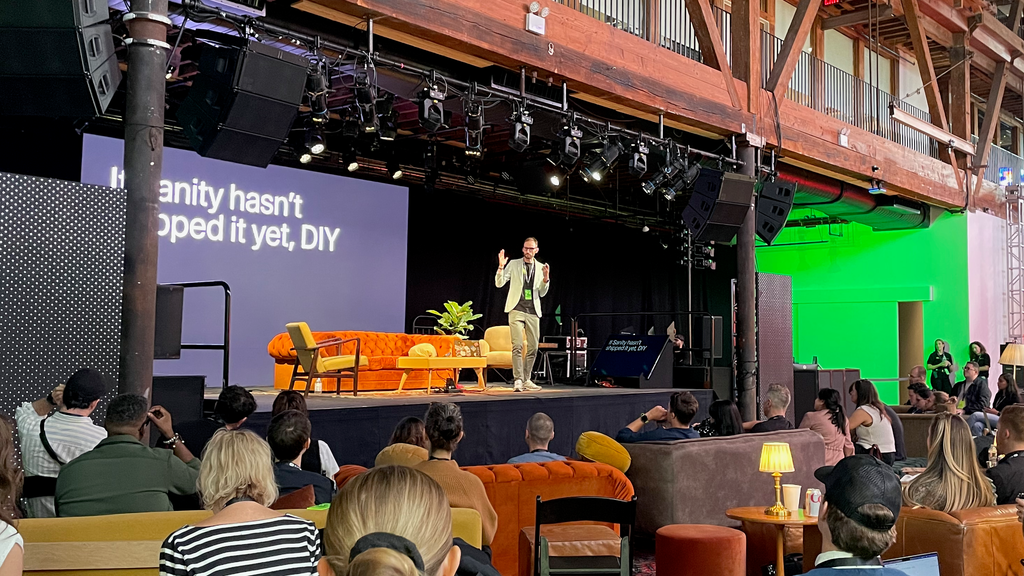
Last week I had the pleasure of attending Sanity’s first annual “Everything*[NYC]” developer conference. This one-day event was packed with perspectives, feature demos, and customer stories showcasing the leaps forward Sanity has made in the last year—and shining a light down the path of where they’re headed in the rapidly evolving content creation and management space.
Everything*[NYC] was a product conference, as opposed to a discipline or industry conference. The sessions and demos were thus expectedly rosy. I’m a fan of both the tools Sanity creates and the philosophy that informs them, so this all landed well with me. The consulting work I do, however, focuses first and foremost on my clients’ needs, so I was likewise keen to explore the edges of the programmed narrative with Sanity developers, customers, potential customers, and fellow agency partners in courtyard conversations throughout the day.
In that spirit, read on for my themes and takeaways from the event. I’ll cover what I’m seeing (and am enthused about) from Sanity, what I heard from peers and colleagues in the courtyard, and share a nerdy milestone that I’m counting as a small personal victory in my quest to wean folks away from the idea that “content” necessarily means “pages.”
Platform Themes
The single overarching theme for the day as a whole was “AI” (i.e. LLM) integration into the Sanity platform. Sanity co-founders Magnus Hillestad and Simen Svale et this context with a morning keynote focused on the difference between replacing work with technology (i.e. most approaches in the recent “AI” deluge) and rewiring work with technology. They drew a parallel to the (first) industrial revolution, where technology initially displaced individual workers, then, in a fast-follow second act, changed the infrastructure of how work was done altogether, creating new economies of scale and new opportunities.
Agent Actions
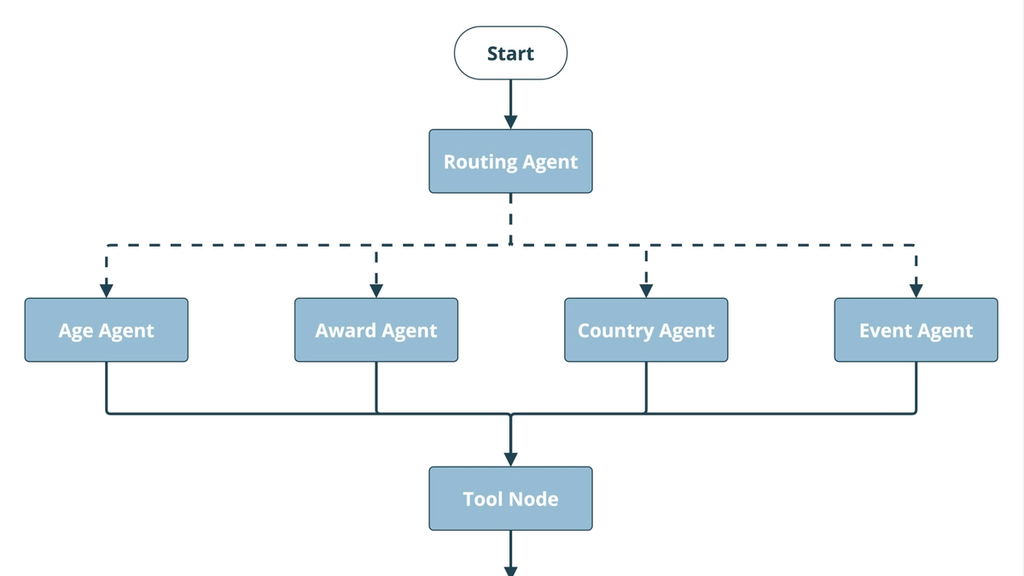
Agent Actions provide one example of how Sanity is building infrastructure to not just use AI, but to rewire content work around it. Agent Actions allow developers to code functions that use integrated LLMs to perform defined operations on content using other content as context. This last piece is what piques my interest most: prompts can be managed as documents, and actions can programmatically search and use other content in a collection as context.
As an example, The Met shared an agent action they use to automatically evaluate content against their ten page style guide as part of the publication process. One could do this with NLP, or one could try to get authors to apply these rules assiduously, but in my experience, the former approach tends to be fussy and brittle, and the latter approach makes me feel like a schoolmarm with a penchant for hitting children with rulers. (You’re welcome for that mental image.) The agent action means that these checks happen for every document that gets published, and it does so without requiring additional review steps from content producers.
A second case study, presented by Lauren Herdman of Mejuri, demonstrated how Mejuri uses an agent action to systematically find, reuse, and repurpose content across their collection to increase consistency and cut down on duplication. At first glance this might sound routine, but the struggle of organizations to understand what content they have and avoid recreating content that already exists is real—and costly. As with The Met example above, these are checks that can be applied every time a piece of content is changed. This is work that is theoretically possible with the right discipline and structure … but which I’ve never seen pulled off at scale in the real world.
Reshaping Content Problems to Fit the New Wiring
Everything*[NYC] was explicitly billed as a developer conference, so I wasn’t too surprised to see the content design decisions that make the new tech work getting less stage time. Sean Grove (OpenAI & Netlify) did, however, discuss the need to “reshape the problems we address” to take advantage of emerging AI infrastructure by destructuring them to run across multiple agents. Grove’s thesis focused on the development process and creating actionable specifications for AI agents, but this sentiment rings equally true to the way we structure information in the schemas and content models with which those agents operate.
In my experience, many organizations—including those using cutting edge platforms like Sanity—still tend to think of their content as “pages.” The Met style guide example from above, clocking in at “ten pages,” is a case in point. If that guide is like any other I’ve seen, it is composed of an extensive set of directives that work together systematically to create an intended outcome. Loading that ten page document into an LLM context window is certainly a first step in adjusting to this new infrastructure, but it also brings the problem’s old “shape” to our shiny new solution. Sanity has given developers the ability to model information like this as classified, distinct assertions from day one. There’s a bit more planning and set-up involved, but this provides a shape that can be indexed, managed, and composed at scale, both for humans (yes, often as pages) and as data for the bots increasingly among us.
This brings me to a corollary to the “rail” example of the industrial revolution. Railway right-of-ways literally paved the way for the uninhibited place-to-place connections needed for telegraph, which had repercussions not possibly imagined by those laying the first rail lines. Will integration with AI provide the right-of-way for destructuring our content into systematically related propositions, as opposed to the blobby page construct that’s been with us since moveable type nudged us into mass literacy? We’ll see!
Courtyard Themes
Across the several conversations I had with current and prospective Sanity customers and fellow agency colleagues, two themes emerged with conspicuous regularity: folks are still struggling with the chaos of connecting content across product silos, and folks are still locked deep in a mindset of “content as pages.”
As with the writing guide example discussed above, the tools for breaking out of the “pages” mindset are already at hand. Bridging silos is a pricklier task (see Dave McComb’s Software Wasteland andThe Data-Centric Revolution for all the gory details), but shares a similar root cause with the “pages” problem: idiosyncratic information models across across silos (and pages) make connecting the facts, concepts, and ideas they share in common a manual task.
A large enough language model could maybe make some of those connections with almost reasonable accuracy, but those same models can also help us structure content in a way that simpler models (or simply taxonomies) could make those connections with far greater accuracy.
As above: We’ll see! I’m encouraged, however, that, even if some organizations’ inertia keeps them from following an “ideal” path toward structured content, we at least have the tools for taking incremental steps toward creating the structural and semantic foundations that can keep our newly wired AI workplaces from going completely, well, “off the rails.” (Sooo many metaphors 🙄)
One Small Nerd Victory
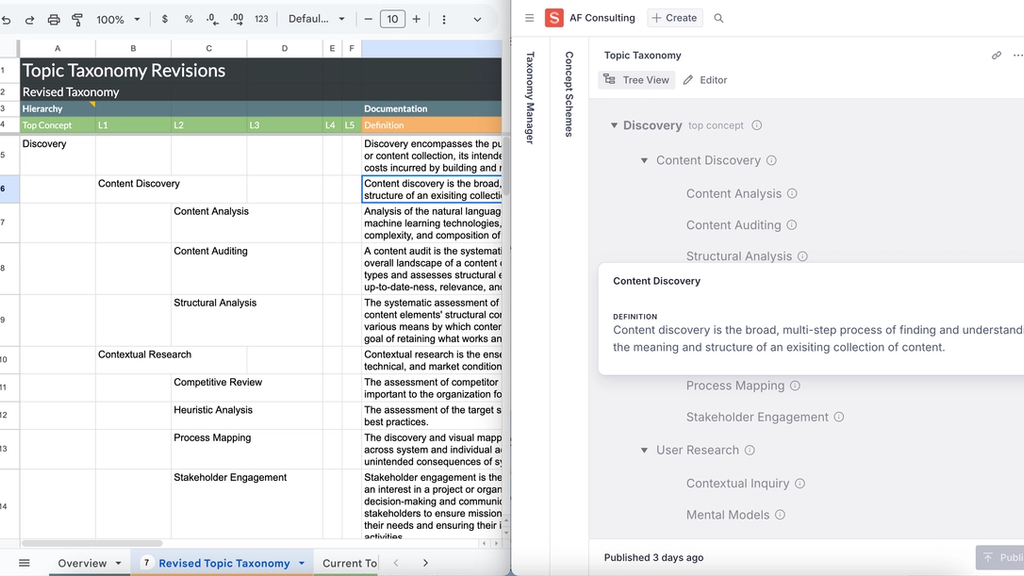
This is only a “theme” inasmuch as it occurred more than once, but occasionally, when I introduced myself to someone new, they would respond with, “Oh, you’re the taxonomy guy.” Guilty as charged! 🎉